


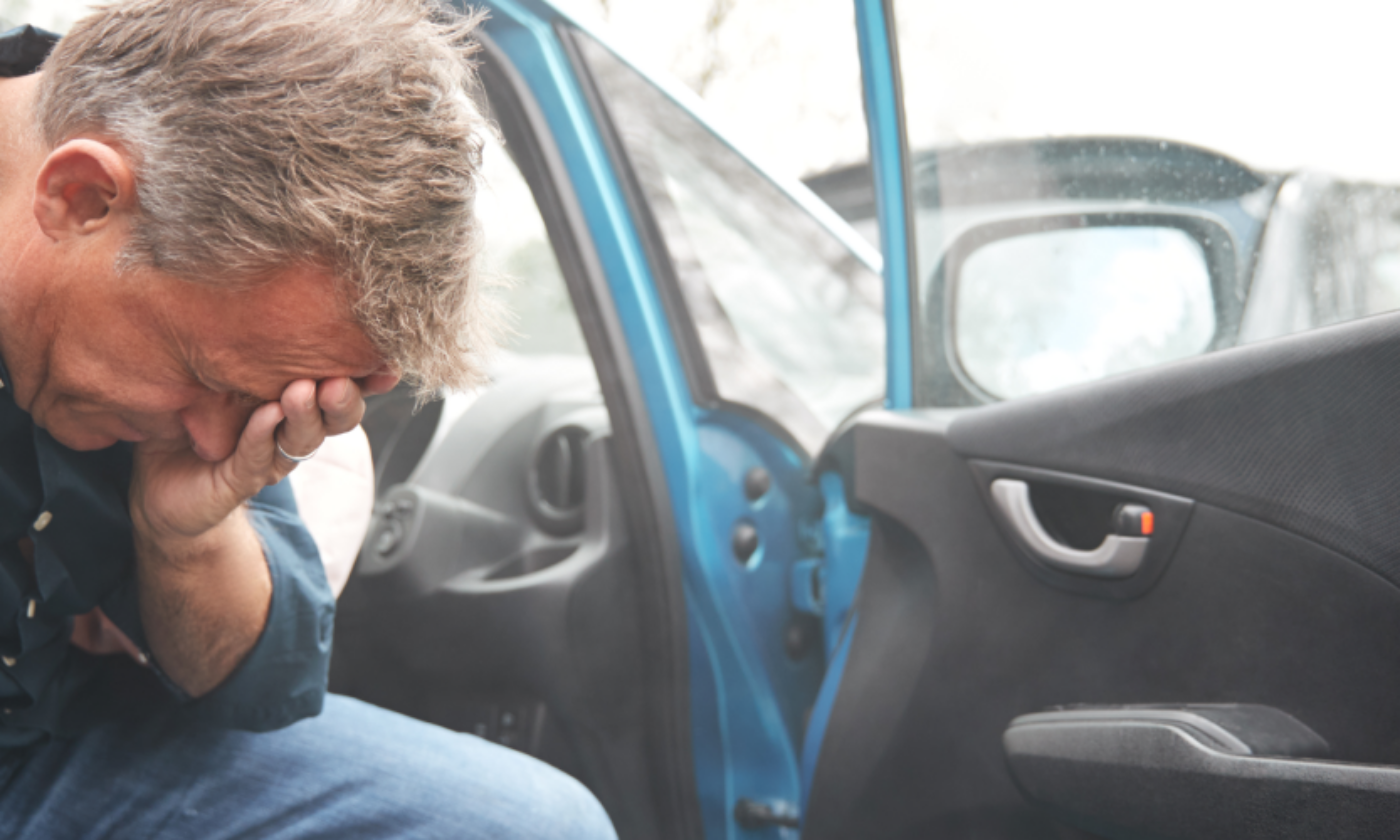
Emotional trauma is a real accident injury
Psychological injury is a recognised category of harm in motor accident compensation. The schemes contemplate it, medical practitioners diagnose it, and it can be claimed. The difficulty is rarely whether psychological injury ‘counts’ in principle — it’s the evidence and the thresholds, which we come to below.
It’s also common. A significant proportion of people involved in serious crashes experience some psychological effect, and for a meaningful minority those effects persist and develop into a diagnosable condition. If that’s happening to you, you are not unusual and you are not imagining it.
Anxiety, PTSD and driving-related fear
The psychological effects of a car accident take recognisable forms.
- Post-traumatic stress disorder (PTSD). Intrusive memories or flashbacks, nightmares, hypervigilance, and avoidance of things connected to the accident. Driving or travelling as a passenger can become a trigger.
- Anxiety disorders. Persistent, disproportionate worry, panic attacks, and physical symptoms such as a racing heart, particularly around driving or traffic.
- Depression. Low mood, loss of interest, sleep and appetite changes, and difficulty functioning — sometimes flowing from chronic pain or from the disruption the accident caused to work and life.
- Driving-related phobia. A specific, intense fear of driving or of being a passenger that can significantly restrict daily life, work and independence.
- Adjustment difficulties. Difficulty coping in the weeks and months after the accident. Important legally: an adjustment disorder or an acute stress reaction, on its own, is often treated differently from a more serious diagnosed illness — see the thresholds section below.
These conditions are real and treatable. Whether a given condition supports a compensation claim, and what it can recover, is a separate question that turns on diagnosis and on the thresholds in your state — not on how much you’re suffering, which is a hard thing to sit with but important to understand.
Why psychological injuries are harder to claim
Two hurdles sit in front of a psychological injury claim that a physical injury often clears more easily. Neither makes a claim impossible. Both are worth understanding early, because they shape the evidence you need.
The need for a diagnosed condition
Distress alone generally isn’t enough. Feeling shaken, upset or anxious after an accident is a normal human response, and the schemes don’t treat every such response as a compensable injury. What’s generally required is a diagnosed psychiatric or psychological condition — assessed by a qualified practitioner against recognised diagnostic criteria.
This is where a lot of claims run into difficulty, and often for avoidable reasons:
- People delay seeking help, so there’s no early record of the condition.
- They mention physical injuries to their doctor but not the psychological ones, so the psychological injury isn’t documented from the start.
- They see their GP but are never referred to a psychologist or psychiatrist, so there’s no specialist diagnosis.
- The condition is real but the paper trail is thin, which gives an insurer room to dispute it.
The practical implication: if you’re experiencing psychological effects, telling your treating doctor about them — and having them recorded and, where appropriate, referred on — is both good for your recovery and important for any claim. The two goals point the same way.
Thresholds for pain and suffering
This is the hurdle that surprises people most, and the one where honesty serves you better than optimism.
Most Australian motor accident schemes distinguish between the ongoing support available to injured people — treatment, income support — and lump sum damages for pain and suffering, known as non-economic loss. The first is more widely available. The second is gated behind thresholds that are applied strictly.
In NSW, for example, there are really two separate gates, and people often run them together:
- Gate 1 — is the injury a recognised psychiatric illness? A psychological injury that is not a recognised psychiatric illness is generally placed in the more limited category. Certain diagnoses — commonly including acute stress disorder and adjustment disorder — are expressly excluded from the more serious category, even though they are real and can be debilitating. A diagnosis in the more serious group (such as PTSD or major depressive disorder) clears this gate, though the diagnosis itself can be contested and reassessed.
- Gate 2 — does the impairment meet the damages threshold? Clearing Gate 1 does not by itself unlock pain-and-suffering damages. In NSW those generally require whole person impairment greater than 10%, assessed for a psychiatric injury on a psychiatric impairment scale by a properly trained assessor — and psychiatric impairment generally cannot be combined with physical impairment to cross the threshold. They are assessed separately.
The practical consequence is that a recognised, accident-caused psychiatric illness — PTSD, say, assessed at 8 or 9 per cent — can clear the first gate and still fall below the second. That is a common and genuinely difficult outcome, not an unusual one.
Other states run their own schemes with their own tests and thresholds — Victoria’s scheme under the Transport Accident Act 1986 and Queensland’s under the Motor Accident Insurance Act 1994 each treat these questions differently. And in NSW, reforms affecting psychological injury claims commenced on 1 July 2026, so the current position should be checked rather than assumed.
How car accident compensation for pain and suffering works
Compensation after a car accident generally falls into a few categories, and pain and suffering is only one of them. Understanding the distinction helps set realistic expectations.
The main categories of compensation
| Category | What it covers, and how psychological injury fits |
|---|---|
| Treatment and care | Reasonably necessary treatment — including psychological treatment such as therapy and psychiatry. Often available without meeting the pain-and-suffering threshold. |
| Income support | Payments where the injury — including a psychological injury — reduces your capacity to work. Subject to the scheme’s own rules and time limits. |
| Economic loss (damages) | Past and future lost earnings where the injury affects earning capacity. Separate rules on fault and causation apply. |
| Pain and suffering (non-economic loss) | A lump sum for the pain, distress and loss of enjoyment of life. This is the category gated behind the impairment threshold, and the hardest for a psychological injury to reach. |
General orientation only, and the categories and rules differ by state. Your entitlements depend on the scheme, your diagnosis and your circumstances.
There is no standard figure for pain and suffering, and any ‘average’ quoted for a psychological injury should be treated with caution. Where a claim does meet the threshold, the amount depends on the severity and permanence of the impairment and on the scheme’s own limits. As the thresholds section above explains, many genuine psychological injuries never reach this category at all, while still supporting treatment and income entitlements. Timing also matters: psychiatric impairment is generally only assessed once the condition has stabilised, which can take considerable time, and this is one reason these claims can take longer to resolve than a straightforward physical injury.
How to strengthen a claim for emotional trauma
If you’re experiencing psychological effects after an accident, a few things genuinely help — both your recovery and any claim, which point the same way.
- Get help early, and tell your doctor about the psychological effects. Not just the physical ones. This is the single most useful thing you can do. It supports your recovery and creates the early medical record a claim depends on.
- Ask about a referral to a psychologist or psychiatrist if symptoms persist. A specialist diagnosis carries more weight than a GP note alone, and specialist treatment helps.
- Keep a simple record of how you’re affected — sleep, driving, work, relationships, activities you’ve stopped. A contemporaneous account is more persuasive than one reconstructed later, and it helps your treaters understand the impact.
- Attend the treatment you’re given and keep appointments. Gaps in treatment can be used to argue a condition resolved, and continuity helps you get better.
- Be honest and consistent about your symptoms across every practitioner you see. Consistency is what makes the medical picture credible.
- Get advice about your diagnosis and its classification. Because so much turns on how the injury is categorised and assessed, and because those decisions can sometimes be challenged, this is worth proper advice rather than assumption.
Talk to a motor accident lawyer
Psychological injury claims are among the most commonly misunderstood — by claimants who assume distress alone is enough, and sometimes by insurers who classify a serious condition too narrowly. If you’ve been told your psychological injury doesn’t qualify, or you’re not sure where you stand, that’s worth checking rather than accepting.
LHD can review your diagnosis and medical evidence, explain how your state’s scheme treats psychological injury and what your claim would need to establish, advise whether a classification decision can be challenged, and confirm the time limits that apply. We act on a no win, no fee basis for most motor vehicle accident claims, and we’ll explain any legal costs clearly before anything proceeds. It costs nothing to find out where you stand.
Learn more about LHD’s motor vehicle accident claims.
FAQs
Can I claim compensation for emotional trauma after a car accident?
Is PTSD after a car accident compensable?
How is pain and suffering calculated after a car accident?
Do I need a diagnosis to claim for psychological injury?
Why are emotional injury claims harder than physical ones?
Other Insights you may be interested in


Speak with our team about your claim
Complete the form or call 1800 455 725 for free claim advice.
Call now- 99% win rate
- No win no fee guarantee
- Over 35 years experience